Showing posts with label (D) 3MW. Show all posts
Showing posts with label (D) 3MW. Show all posts
Monday, 27 June 2016

Tuesday, 31 May 2016
News
Part One
The News broadcast that I chose was the BBC One-Minute World News for 26/05/2016. On this particular news broadcast we see three of the key events that are happening around the world within 24 hours.
The first story shown to the audience is the disruption of France due to unions such as oil refineries, nuclear power stations and ports, leading strikes that have caused motor ways and bridges to be blocked. The second story is about four Islamic military people who were suspected of placing a bomb in a bar screening of the world cup football match to be guilty.
Another story that is briefly mentioned is the missing Egyptian plane and have began taking further searches within a 5 kilometer area of the Mediterranean sea to look for the planes transmitter.
The final story that my chosen news broadcast shows is about Amber Heard filing for a divorce with Johnny Depp.
In the starting sequence of the news broadcast we see the opening credits and music come in and we are introduced to the spokeswomen named Lucy Hockings who reads the top headlines for us.
We see a use of visuals to help explain the story better for us as the audience and make it easier for the audience to understand.
Part Two
For my broadcast I only had one main presenter named Lucy Hockings. Lucy is an early forties woman that is from New Zealand originally. She works as a New Zealand journalist within BBC World News and was made to have speech lessons due to the problems her accent caused her on public television.Her role as a newsreader is to inform the audience of the current news as it happens with none of their own opinions coming through to the audience. It is also their role to keep the audiences informed as well as entertained.
The skills needed when becoming a newsreader is researching and guiding, story telling to a medium and the ability to think and adapt as technology changes. An essential skill for news readers to have is to have a tone that makes the stories seem warm and engaging to the audience and not threatening or harsh.
Part Three
A news order or a running order is there to help people know what happened on the programme in an accurate manner. For the news, the editor is the one that makes the final decision about the ordering and makes sure that the entries for the news are at the right place for viewing. For the news, the first thing to be shown is the lead story or the lead, which is longer than all the others due to having the most information provided to the audience as well as being the most essential.
The next stories that are provided to the audience are ones that are ranked on interest and provide a mix of stories to convey different emotions.
Another way the news captures the audience interest is by using a news round-up which provide information on national or international news for the viewers to watch.
There is also the potential use of a sports round up which is good to keep the audience up to date on the essential scores of matches and to provide short interviews with some of the players.
To keep the audience further interested, the news focuses on providing a round up of the weather which is either in the studio or on an outside location.
At the end of the news some studios focus on providing a lighter story at the end by stating, "And finally..."
When it comes to the timings of the running order, the editor ensures that the lead story is the longest piece to provide information to the audience but not too long to make them loose interest. Each story that comes later on in the running order is a lot shorter so must capture the key pieces of information to capture the audiences attention before their time is up.
A key skill that news reporters must be able to do it to adapt to news whenever possible. For example, if the lead was focusing on the benefits of longer education and your editor informs you that a bomb has just gone off in an airport in London, then that is your top lead story. With this in mind the news reporter must adapt by talking about the breaking news that has just occurred and be able to successfully talk on the spot towards the audience that are watching this. Being flexible and prepared to change shows you are able to discuss any matter easily, making you a good reporter.
Sometimes when there is little news to report, we have a slow news day due to having a lack of substantial topics. The final story on the news is usually the lighter story to round off on a good note. The news reporter usually ends it "And finally" before stating the last short story of the day before the news ends completely. It's role is to display a more positive approach within the country and to show that there is a vast variety of news for the audience to know and understand.
The News Values Theory is believed that our perception of what creates the event is currently determined and isn't a natural occurrence. The theory stated that the more an event is accessed by the criteria, the more likely it will be reported to the news.
An example of this is the obsession we have with celebrities and the gossip of our lives. When it came to David Beckham splitting with Victoria we had a front page spread of the story to interest the readers. Yet on the same day, five children were killed in a minibus accident and did not reach the front cover. The news reporters and journalists focus on the most interesting story for the audience and place that as the cover or the lead story.
When it comes to the News Values of Galtung and Ruge (1973) we see there were a number of topics that went with the theory.
Below are the twelve topics and there meanings:
Immediacy: Has it happened recently?
Familiarity: Is is culturally close to us in Britain?
Amplitude: Is is a big even that affects large numbers?
Frequency: Does the event happen often?
Unambiguity: Is it clear and definite?
Predictability: Did we expect it to happen?
Surprise: Is is rare or unexpected event?
Continuity: Has it previously been defined as news?
Elite Nations/People: Big countries or celebrities?
Personalisation: Is is a human interest story?
Negativity: Is is bad news?
Balance: "and finally" fun story to balance bad news...
When it came to looking for my own evidence of these topics I began to search on YouTube for news reports with any of these related to it.
My first short clip I found was called the "EU Referendum: Are you in or out?" which stated a lot of different people and there beliefs towards the EU.
When looking at this I found that it related to the Galtung and Ruge Theory with being Immediacy, Familiarity, Amplitude, Unambiguity, Surprise, Continuity and Elite Nations/People.
This short news broadcast shows us the effects of what will happen to the UK when having to vote an essential choice such as this one. It has happened recently and is very close to the UK citizens with the results of effecting a large number within the country. Not only does it do this but it also shows clear and definite opinions to an unexpected event and has been constantly reviewed on the news for the past upcoming months. It is also based on a big countries such as all that are in the EU and how it will effect our country with theirs.
Another key clip I found was called "2001-09-11 World Trade Center Attacks, BBC + ITV News Opening". This clip shows the gripping scene of the World Trade Center being attacked as well as the Pentagon. This clip portrays to the audience about the extremes that terrorism had reached and was a rare event that occurred, making it Frequency. It was something that no one expected to happen and is still to this day a human interest story due to the dramatic effect it has had on people within the time it happened as well as the following years. It is displayed as bad news due to the tragic display of horror that was sent towards America and resulted in thousands of people to die or be injured due to this awful event.
When it came to the balance of finding a lighter, happier story for the audience to see at the end of the news. For mine I found the short story about a fake penguin providing research to scientists to help conserve the species. This story informs the audience of how the rover was dressed like a penguin chick in order to get close enough to the creatures. With this alone, the scientists were able to see that this did not stress the penguins or increase there heart rate informing the audience a little about the life of the penguins and what makes them stressed. This story is not only factual but is also displayed as humourous due to how the scientists had to work to be able to collect any information, providing a funny, interesting side to the audience.
Part Four
The news isnt always a 100% truthful matter and can sometimes sneak into the news without the audience noticing.
There are various ways that we able to notice the news becoming bais, the first is being bais through selection and omission.
Selection and Omission means that the editor can choose whether or not to tell a specific news story. Within the story, some of the details can be either ignored or given out to allow the audience to provide the audience a different opinion on the matter.
The only way to varify if this particular type of bais behaviour is noticed, is by comparing a wide variety of sources to news reports.
An example of this would be how an editor might believe that an advertiser wants younger readers due to spending more money, so will ignore any news that holds a significant interest towardszs the elderly.
Another key detection is Bais through placement. This is related to the structure of a magazine and how we see the top story on the front page to grab the interest of the audience. The story on the front page is therefore suppose to be a lot more interesting and eye-appealing to the audience than a story somewhere in the middle or the back of the magazine. When it comes to TV and radio broadcastings we see that the top ratings are the first to be spoken of and the less appealing stories are to be told later.
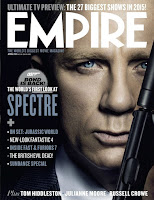
Examples of this are two front covers of Empire magazine and the top announcements of particular films placed on the front to grab the interest of the readers.

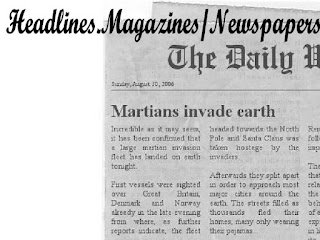
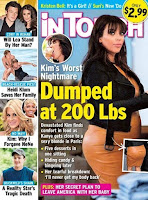
The third detection of being bais is by the headline. The headlines are the most read part of a magazine due to its bold letters and interesting font but half the time the story may appear interesting but really isn't when the audience begins to read it. This is therefore a misleading matter and is baised. Here are a few examples below:
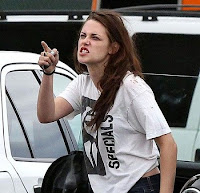
Not only is there bais through headlines, but there is also being baised through camera angles, captions and photos. When it comes to the world of photography, we see that a series of shots can get any emotion or thought through to another person all due to how another looks or seems. A photo can make someone look stupid, angry, upset or funny but that might not be the whole story. The paper not only chooses the most factual photo, but also the most interesting to capture the audiences' attention as well as causing a heavy influence on their persepective of that person. Below are a few examples.

Another is bais being baised through the use of names and titles. The news often uses names or titles to describe a place or a person to the audience. An example of this would be how someone referred to as an "ex-con" leaves the audience thinking of someone who has spent a considerable amount of time in prison. Another example of this bais theory would be how a man can be placed as "Lord" and instantly refers the audience into thinking of a man with a serious amount of money with a very posh voice.
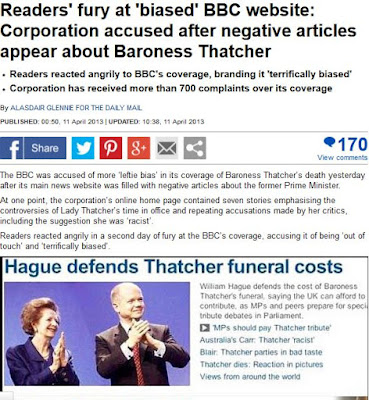 Finally, the last bais theory is the bais through the choice of words. When it comes to watching or listening to the news, people can display a particular connotation due to hearing a negative or postive remark about them. There is also the use of a tone in the newscasters voice which could also help give a directed opinion to the audience making them think what they think about this person or place due to what they have heard.
An example of this is below.
The News broadcast that I chose was the BBC One-Minute World News for 26/05/2016. On this particular news broadcast we see three of the key events that are happening around the world within 24 hours.
The first story shown to the audience is the disruption of France due to unions such as oil refineries, nuclear power stations and ports, leading strikes that have caused motor ways and bridges to be blocked. The second story is about four Islamic military people who were suspected of placing a bomb in a bar screening of the world cup football match to be guilty.
Another story that is briefly mentioned is the missing Egyptian plane and have began taking further searches within a 5 kilometer area of the Mediterranean sea to look for the planes transmitter.
The final story that my chosen news broadcast shows is about Amber Heard filing for a divorce with Johnny Depp.
In the starting sequence of the news broadcast we see the opening credits and music come in and we are introduced to the spokeswomen named Lucy Hockings who reads the top headlines for us.
We see a use of visuals to help explain the story better for us as the audience and make it easier for the audience to understand.
Part Two
For my broadcast I only had one main presenter named Lucy Hockings. Lucy is an early forties woman that is from New Zealand originally. She works as a New Zealand journalist within BBC World News and was made to have speech lessons due to the problems her accent caused her on public television.Her role as a newsreader is to inform the audience of the current news as it happens with none of their own opinions coming through to the audience. It is also their role to keep the audiences informed as well as entertained.
The skills needed when becoming a newsreader is researching and guiding, story telling to a medium and the ability to think and adapt as technology changes. An essential skill for news readers to have is to have a tone that makes the stories seem warm and engaging to the audience and not threatening or harsh.
Part Three
A news order or a running order is there to help people know what happened on the programme in an accurate manner. For the news, the editor is the one that makes the final decision about the ordering and makes sure that the entries for the news are at the right place for viewing. For the news, the first thing to be shown is the lead story or the lead, which is longer than all the others due to having the most information provided to the audience as well as being the most essential.
The next stories that are provided to the audience are ones that are ranked on interest and provide a mix of stories to convey different emotions.
Another way the news captures the audience interest is by using a news round-up which provide information on national or international news for the viewers to watch.
There is also the potential use of a sports round up which is good to keep the audience up to date on the essential scores of matches and to provide short interviews with some of the players.
To keep the audience further interested, the news focuses on providing a round up of the weather which is either in the studio or on an outside location.
At the end of the news some studios focus on providing a lighter story at the end by stating, "And finally..."
When it comes to the timings of the running order, the editor ensures that the lead story is the longest piece to provide information to the audience but not too long to make them loose interest. Each story that comes later on in the running order is a lot shorter so must capture the key pieces of information to capture the audiences attention before their time is up.
A key skill that news reporters must be able to do it to adapt to news whenever possible. For example, if the lead was focusing on the benefits of longer education and your editor informs you that a bomb has just gone off in an airport in London, then that is your top lead story. With this in mind the news reporter must adapt by talking about the breaking news that has just occurred and be able to successfully talk on the spot towards the audience that are watching this. Being flexible and prepared to change shows you are able to discuss any matter easily, making you a good reporter.
Sometimes when there is little news to report, we have a slow news day due to having a lack of substantial topics. The final story on the news is usually the lighter story to round off on a good note. The news reporter usually ends it "And finally" before stating the last short story of the day before the news ends completely. It's role is to display a more positive approach within the country and to show that there is a vast variety of news for the audience to know and understand.
The News Values Theory is believed that our perception of what creates the event is currently determined and isn't a natural occurrence. The theory stated that the more an event is accessed by the criteria, the more likely it will be reported to the news.
An example of this is the obsession we have with celebrities and the gossip of our lives. When it came to David Beckham splitting with Victoria we had a front page spread of the story to interest the readers. Yet on the same day, five children were killed in a minibus accident and did not reach the front cover. The news reporters and journalists focus on the most interesting story for the audience and place that as the cover or the lead story.
When it comes to the News Values of Galtung and Ruge (1973) we see there were a number of topics that went with the theory.
Below are the twelve topics and there meanings:
Immediacy: Has it happened recently?
Familiarity: Is is culturally close to us in Britain?
Amplitude: Is is a big even that affects large numbers?
Frequency: Does the event happen often?
Unambiguity: Is it clear and definite?
Predictability: Did we expect it to happen?
Surprise: Is is rare or unexpected event?
Continuity: Has it previously been defined as news?
Elite Nations/People: Big countries or celebrities?
Personalisation: Is is a human interest story?
Negativity: Is is bad news?
Balance: "and finally" fun story to balance bad news...
When it came to looking for my own evidence of these topics I began to search on YouTube for news reports with any of these related to it.
My first short clip I found was called the "EU Referendum: Are you in or out?" which stated a lot of different people and there beliefs towards the EU.
When looking at this I found that it related to the Galtung and Ruge Theory with being Immediacy, Familiarity, Amplitude, Unambiguity, Surprise, Continuity and Elite Nations/People.
This short news broadcast shows us the effects of what will happen to the UK when having to vote an essential choice such as this one. It has happened recently and is very close to the UK citizens with the results of effecting a large number within the country. Not only does it do this but it also shows clear and definite opinions to an unexpected event and has been constantly reviewed on the news for the past upcoming months. It is also based on a big countries such as all that are in the EU and how it will effect our country with theirs.
Another key clip I found was called "2001-09-11 World Trade Center Attacks, BBC + ITV News Opening". This clip shows the gripping scene of the World Trade Center being attacked as well as the Pentagon. This clip portrays to the audience about the extremes that terrorism had reached and was a rare event that occurred, making it Frequency. It was something that no one expected to happen and is still to this day a human interest story due to the dramatic effect it has had on people within the time it happened as well as the following years. It is displayed as bad news due to the tragic display of horror that was sent towards America and resulted in thousands of people to die or be injured due to this awful event.
When it came to the balance of finding a lighter, happier story for the audience to see at the end of the news. For mine I found the short story about a fake penguin providing research to scientists to help conserve the species. This story informs the audience of how the rover was dressed like a penguin chick in order to get close enough to the creatures. With this alone, the scientists were able to see that this did not stress the penguins or increase there heart rate informing the audience a little about the life of the penguins and what makes them stressed. This story is not only factual but is also displayed as humourous due to how the scientists had to work to be able to collect any information, providing a funny, interesting side to the audience.
Part Four
The news isnt always a 100% truthful matter and can sometimes sneak into the news without the audience noticing.
There are various ways that we able to notice the news becoming bais, the first is being bais through selection and omission.
Selection and Omission means that the editor can choose whether or not to tell a specific news story. Within the story, some of the details can be either ignored or given out to allow the audience to provide the audience a different opinion on the matter.
The only way to varify if this particular type of bais behaviour is noticed, is by comparing a wide variety of sources to news reports.
An example of this would be how an editor might believe that an advertiser wants younger readers due to spending more money, so will ignore any news that holds a significant interest towardszs the elderly.
Another key detection is Bais through placement. This is related to the structure of a magazine and how we see the top story on the front page to grab the interest of the audience. The story on the front page is therefore suppose to be a lot more interesting and eye-appealing to the audience than a story somewhere in the middle or the back of the magazine. When it comes to TV and radio broadcastings we see that the top ratings are the first to be spoken of and the less appealing stories are to be told later.
Examples of this are two front covers of Empire magazine and the top announcements of particular films placed on the front to grab the interest of the readers.


The third detection of being bais is by the headline. The headlines are the most read part of a magazine due to its bold letters and interesting font but half the time the story may appear interesting but really isn't when the audience begins to read it. This is therefore a misleading matter and is baised. Here are a few examples below:


Not only is there bais through headlines, but there is also being baised through camera angles, captions and photos. When it comes to the world of photography, we see that a series of shots can get any emotion or thought through to another person all due to how another looks or seems. A photo can make someone look stupid, angry, upset or funny but that might not be the whole story. The paper not only chooses the most factual photo, but also the most interesting to capture the audiences' attention as well as causing a heavy influence on their persepective of that person. Below are a few examples.


 Finally, the last bais theory is the bais through the choice of words. When it comes to watching or listening to the news, people can display a particular connotation due to hearing a negative or postive remark about them. There is also the use of a tone in the newscasters voice which could also help give a directed opinion to the audience making them think what they think about this person or place due to what they have heard.
 An example of this is below.
Friday, 27 May 2016
Research - Primary and Secondary
Primary Research
For the primary research I focused on doing a survey asking questions to the public about their views and thoughts on 9/11. Throughout this survey I asked particular questions such as "Do you find 9/11 a significant matter?" and "What is your instant reaction when seeing clips of 9/11."
The answers I got from this survey are all different providing me with a great source of detail for my own work. For example, the question asking people what their instant reaction was to the event, I got a mixture of different views. Some people said sadness and horror, whilst a few people said they were interested with why it happened in the first place.
Secondary Research


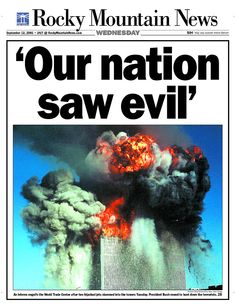
For my secondary research I found a website that focused on the stories of people across the world and where they were when 9/11 happen. I went through the website and chose a few stories that provide the audience with an emotional response and can actually see how and what the person telling the story felt at this time. Other secondary research ideas are stuff like documentaries, blog posts, magazine articles and newspaper headlines to name but a few. Below are also some examples of what the impact was of 9/11, featured in newspapers and books.



Tuesday, 17 May 2016
Proposal
 My idea for the three minute documentary is people recalling back on the events that happened on 9/11. Throughout my documentary I would have people discuss where they were when 9/11 happened and what there response was too it. I would also provide real footage of the encounter as well as photos of the event taking place.
It would be a docudrama but also educational due to knowing the emotional and physical impact for people who witnessed this.
My aim for this documentary is to allow people to see how 9/11 is still a significant event that happened many years ago and how so many people are still affected by its results. What I hope to achieve from this is a more dramatic documentary that portrays emotion from the interviewee towards the audience and show that even after time some things arent able to be forgotten.
Dependant on who I would interview I would either remain within the college or ask people that are outside the college grounds.
For the production team I would need someone for the camera and someone to ask the questions to the interviewee whilst filming the piece. We would not need any experts only witnesses that can recall the historical moment that happened in America.
Example questions that would be asked to the interviewee would be: Where were you when 9/11 happen? What can you remember seeing and doing when you heard the news? What were your instant thoughts and reactions to this horrible encounter?
For this production we would need a camera, tripod, microphone and factual footage of the incident of 9/11 occuring. Other things we would need would be a place to interview the person we are talking to and there surroundings that are beside them. All of our equipment that is needed for the documentary is available from the AV room and we would not need to buy anything into the production. The proposed budget would be kept to a minimum as much as possible and would only have costs when it came to travel if we chose to not have the location of the production within the college premises.
To conclude on my proposal, we discussed our ideas as a class to get further ideas and responses to the ideas. Each person discussed what there idea was and what they planned to do before having responses to how they felt about the idea and anything we could add or improve the documentary. After discussing my idea with the class I have decided to focus on the impact the event has had on people and asking where they were when 9/11 happened and how it initially made them feel.
Thursday, 12 May 2016
3 Minute Wonder
3 Minute Wonder: Last Supper
The first three minute clip that I enjoyed was called "Last Supper" which focuses on a particular prisoner who tells us his views on his family and being in prison. I like the opening to the documentary due to how it gives a hint of what the documentary is about. We also see the prisoner discuss his views on the last supper and what he would want to eat. His main focus is the effect it will have on his family and the sympathy he has towards them, resulting in the audience having some sympathy towards this.
3 Minute Wonder: Gemma
The second three minute clip is focused on a young girl named Gemma who suffers from cancer. She discusses her views on what is good about being in the hospital and what is bad. For Gemma she finds the hospital food is bad due to them not thinking about the quality, but the quantity; whilst the good side of hospitals is being able to discuss things with people your age that have similar problems as you do and enables her to not feel scared or worried. I like this because she tells her own personnal opinion about it and allows the audience see that it is realistic due to how she states that whatever age you can get cancer.
3 Minute Wonder: Blek Le Rat
The final clip I found focuses on a frenchman who does graffiti. With his graffiti work he uses templates to outline his work and talks about people that do graffiti all over the world. I like this one due to how it shows his process of creating the art work as well as telling the audience his personal view on graffiti in total.
Wednesday, 11 May 2016
Documentary "Mini Task" Essay
A documentary is a non fiction movie that focuses on reality and historical contents. It was first originally shot on a film stock due to having a limited amount of devices to shoot on but after time the technology developed to the point where documentaries were filmed on video and digital.
The first historical importance that represented documentaries was a polish poineer named Boleslaw Matuszewski. He wrote two books in the late 1800s named "A Source of History" and "Animated Photography" which are recognised today as the movie manifestos that display a source of historical and documentary value of films.
Expository Documentaries
An Expository Documentary is where you provide facts and arguments towards the audience, with a clear voice over narrating the piece whilst the images are being shown. Below is my own example of an Expository documentary showing the rise of alcohol prices and peoples views on this. Within this documentary we see a voice over informing us what the documentary is about and how it is related to the images and moving pictures presented to the audience. It provides a lot of evidence focused to the topic and plenty of factual information to make the piece realistic.
Observational Documentaries
Observational documentaries have no presence of the film maker/director and allows the audience to have their own view on the documentary. For my example I found a short clip focusing on hair cuts. Throughout this clip we see close ups and medium shots of a woman having her hair cut short. As the clip continues we see a lot of silent footage we see a lot of particular sounds that we expect to hear when in a hairdressers. The clip has no talk over the process of the hair cut and we are given very little, if not none, about the director/film maker of the documentary. There is also plenty of clips to allow the audience to understand what is going on and allows them to make their own personal choice of the clip.
Interactive Documentary
An Interactive Documentary is slightly different compared to the other documentaries. Compared to an Observational Documentary it shows some elements of a film maker being present with them being a part of the clips. The film maker is shown throughout the clips providing facts and questions towards people he is having in the documentary, to allow the audience to have some knowledge of the required topic the film maker is focusing on.
Due to having the film maker being present in the documentary and seeing him discuss his key topic with guests and other people. Throughout discussing various topics with people, there will be the high tendency of arguments being brought into the discussions. In the documentary I had found we see Louis Theroux inside prison and discussing racial segregation with the prisoners. Throughout the documentary we see Louis learns the basics in safety, and the prisoners views. From this we also see a voice over to narrate the story, as well as the life of prisoners and how some came to be behind bars.
Reflexive Documentary
A reflexive documentary is one that consists of several shots that have been captured on an everyday basis. All of the shots that are placed within the documentary enable the audience to see a vast range of colour, sights, sounds and more with no dialogue throughout. For my example I found a short documentary made by OXFAM portraying the life of people living in Bangledesh. Within this documentary the audience is able to encounter the shocking and horrific disasters that have occured towards these people, and the suffering it has caused also. We also get to see the daily life of people living in that location and how damaging the natural occurances of the world can be.
Performative Documentary
The final key documantary is a performative one which provides a lot of cinematography to seperate from the other ones. Examples of this would be re-enactments, over exaggerated camera shots and the soundtrack also. The aim of these particular documentaries is to show the subject (person) or topic in a particular way. For my example of this type I chose a short performance piece by Lenny D which provides the audience a sense of what a performative documentary is. When looking back at this documentary the audience is able to see a lot of low angles to connote her power of singing and enables us to see that she is good at what she does. With the use of a narrative also, it helps to express what we are seeing and what we expect to happen next.
The dramatisation used in the performative documentary is the use of close ups on her face as well as the low angles of Lenny D performing. The re-enactments that are shown within this is the amount of different shots and angles whilst she is singing the song. This enhances the dramatic effect that the audience feels due to seeing close-ups, long shot and low angles to connote different emotions to the viewers.
Conclusion
To some extent I believe there should be factual information provided in the documentary if you have a particular point that they wish to come across. If the documentary is a reflexive documentary however, then the only factual information provided for the documentary would be the actual footage displayed to the audience. My belief for the documentaries would be that as long as the footage displayed enough realistic actions and guests to discuss the relative topic, then there is no more need for further factual information within the documentary, regardless of its type.
The first historical importance that represented documentaries was a polish poineer named Boleslaw Matuszewski. He wrote two books in the late 1800s named "A Source of History" and "Animated Photography" which are recognised today as the movie manifestos that display a source of historical and documentary value of films.
The first documentary in the late 1800s of surgical operations taking place in Warsaw and Sait Petersburg hospitals. With this in mind, a surgeon named Doyen took around 60 documentaries on surgical operations that have helped guide and assist other surgeons with technical errors that they were not certain of.
Throughout the years we have had film makers focus on historical events of people, places and events that have occurred as well as realistic scenarios that have occurred in that time period.Expository Documentaries
An Expository Documentary is where you provide facts and arguments towards the audience, with a clear voice over narrating the piece whilst the images are being shown. Below is my own example of an Expository documentary showing the rise of alcohol prices and peoples views on this. Within this documentary we see a voice over informing us what the documentary is about and how it is related to the images and moving pictures presented to the audience. It provides a lot of evidence focused to the topic and plenty of factual information to make the piece realistic.
Observational Documentaries
Observational documentaries have no presence of the film maker/director and allows the audience to have their own view on the documentary. For my example I found a short clip focusing on hair cuts. Throughout this clip we see close ups and medium shots of a woman having her hair cut short. As the clip continues we see a lot of silent footage we see a lot of particular sounds that we expect to hear when in a hairdressers. The clip has no talk over the process of the hair cut and we are given very little, if not none, about the director/film maker of the documentary. There is also plenty of clips to allow the audience to understand what is going on and allows them to make their own personal choice of the clip.
Interactive Documentary
An Interactive Documentary is slightly different compared to the other documentaries. Compared to an Observational Documentary it shows some elements of a film maker being present with them being a part of the clips. The film maker is shown throughout the clips providing facts and questions towards people he is having in the documentary, to allow the audience to have some knowledge of the required topic the film maker is focusing on.
Due to having the film maker being present in the documentary and seeing him discuss his key topic with guests and other people. Throughout discussing various topics with people, there will be the high tendency of arguments being brought into the discussions. In the documentary I had found we see Louis Theroux inside prison and discussing racial segregation with the prisoners. Throughout the documentary we see Louis learns the basics in safety, and the prisoners views. From this we also see a voice over to narrate the story, as well as the life of prisoners and how some came to be behind bars.
Reflexive Documentary
A reflexive documentary is one that consists of several shots that have been captured on an everyday basis. All of the shots that are placed within the documentary enable the audience to see a vast range of colour, sights, sounds and more with no dialogue throughout. For my example I found a short documentary made by OXFAM portraying the life of people living in Bangledesh. Within this documentary the audience is able to encounter the shocking and horrific disasters that have occured towards these people, and the suffering it has caused also. We also get to see the daily life of people living in that location and how damaging the natural occurances of the world can be.
Performative Documentary
The final key documantary is a performative one which provides a lot of cinematography to seperate from the other ones. Examples of this would be re-enactments, over exaggerated camera shots and the soundtrack also. The aim of these particular documentaries is to show the subject (person) or topic in a particular way. For my example of this type I chose a short performance piece by Lenny D which provides the audience a sense of what a performative documentary is. When looking back at this documentary the audience is able to see a lot of low angles to connote her power of singing and enables us to see that she is good at what she does. With the use of a narrative also, it helps to express what we are seeing and what we expect to happen next.
The dramatisation used in the performative documentary is the use of close ups on her face as well as the low angles of Lenny D performing. The re-enactments that are shown within this is the amount of different shots and angles whilst she is singing the song. This enhances the dramatic effect that the audience feels due to seeing close-ups, long shot and low angles to connote different emotions to the viewers.
Conclusion
To some extent I believe there should be factual information provided in the documentary if you have a particular point that they wish to come across. If the documentary is a reflexive documentary however, then the only factual information provided for the documentary would be the actual footage displayed to the audience. My belief for the documentaries would be that as long as the footage displayed enough realistic actions and guests to discuss the relative topic, then there is no more need for further factual information within the documentary, regardless of its type.
Subscribe to:
Posts (Atom)